If there’s one reason to come back to Georgia, it’s the food. A blend of Persian, Turkish and Mediterranean influences, with an emphasis on fresh cheese, nuts, herbs and wine. And vegetarians will find a paradise here too.
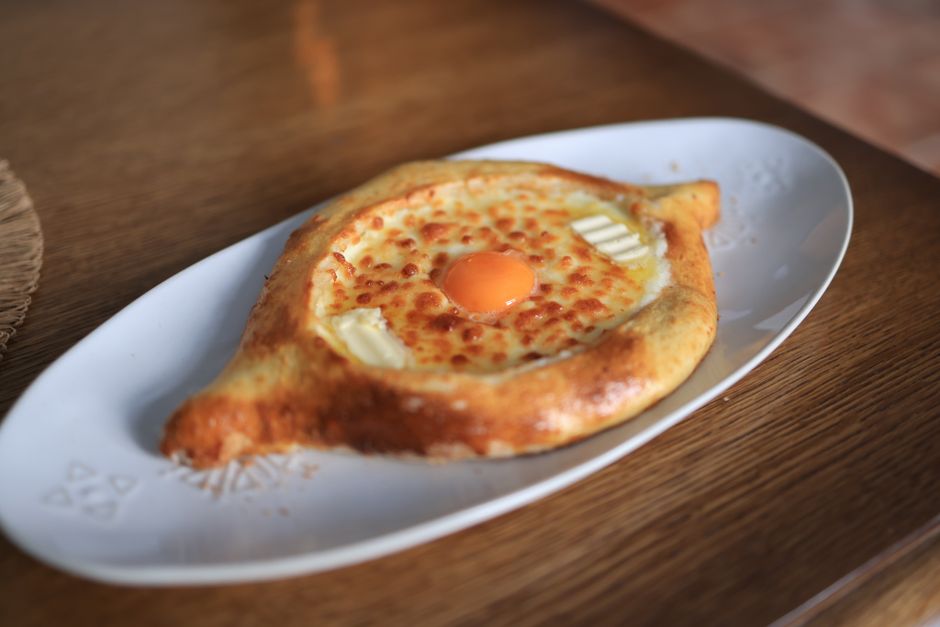
Khachapuri
The national cheese bread, and there isn’t just one. The adjaruli is a dough boat with molten cheese, butter and an egg in the center — you stir it all with a spoon. The imeruli is round and flat, and the megruli has cheese on the outside too. Instant addiction.
Khinkali
Juicy dumplings filled with meat (or potato/cheese), seasoned with caraway. You hold them by the “knob,” bite, sip the broth inside and eat them — no knife or fork. Don’t eat the knob.
Tip: order by number: Georgians count khinkali by the piece. Five to seven is a decent serving.
Grill and vegetarian options
Mtsvadi are char-grilled meat skewers over vine cuttings — simple and perfect. On the vegetarian side: lobio (bean stew in a clay pot), badrijani (eggplant rolled in walnut paste), pkhali (spinach or beetroot balls with walnuts) and ajapsandali (vegetable stew).
Sweets
Churchkhela — a “sausage” of nuts dipped in thickened grape must, the classic roadside snack. Plus mountain honey, homemade jams and local ice cream.
What it costs
A meal at a good local restaurant runs about 30–60 lari per person (about €10–20), with wine included. At a local café or bakery — much less. A single khachapuri is enough for two as a light meal.
The best way to eat the Georgian way is the supra — a family feast with dozens of dishes. More on that separately.
Booking: Food tours and cooking classes · Hotels in Tbilisi